“You Walk Your Cat on a Leash? Come on, It’s Not a Dog!”
That’s a phrase many cat parents would hear just a few years ago. But today, taking your cat outside on a leash is becoming increasingly popular. And that's a good thing because it shows that attitudes are evolving.
But does that mean every cat owner should do it? Not necessarily. Taking your cat outside in a harness requires careful thought and preparation to ensure it becomes an activity that truly benefits your feline friend.
If you're curious about trying it with your cat and want to learn how to do it properly, this article is for you.
Before Heading Outside: Is It Really a Good Idea?
First, it's important to understand that outdoor excursions come with risks and potential sources of stress. The decision to take your cat outside should never be made lightly. Here are a few things to consider when determining whether it's the right activity for your feline companion.
My Cat Is in Good Health
Outdoor walks expose cats to various risks, including escapes, injuries, parasites, heatstroke, and encounters with other animals. For cats with fragile health, these risks can have more significant consequences. Of course, we're talking about possibilities and probabilities, but it's important to weigh the benefits and determine whether walks truly add value to your cat's life.
My Cat Is Not Naturally Anxious
The outdoors provide an almost endless source of stimulation: sounds, textures, scents, and small animals to observe. However, they can also present an almost endless source of potentially stressful situations.
If your cat is highly sensitive to new experiences, reacts strongly to change, or remains affected for a long time after a stressful event, walks may not be the most suitable form of enrichment.
My Cat Has High Stimulation Needs
Whether your cat goes outside or not, it's essential to provide plenty of enrichment indoors to meet all of their needs safely. However, some cats always seem to want more, more, more!
For example, the cat whose battery is still nearly full after two 45-minute play sessions in the same day.
For cats who are constantly seeking new experiences and require significant mental and physical stimulation, outdoor walks can be an excellent addition.
Helping Your Cat Get Used to Wearing a Harness
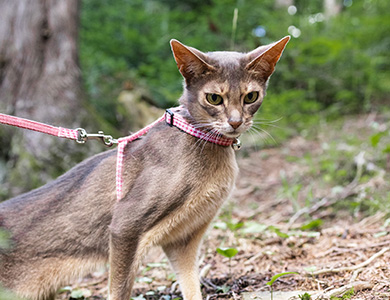
Let's be honest: wearing a harness isn't pleasant for a cat at first. Cats aren't naturally accustomed to having fabric wrapped around their bodies, so if your cat reacts when you try to put on a harness, that's completely normal.
The good news is that you can help them adjust, and that's the most important part.
The process starts indoors, long before any outdoor adventures. Here's an example of a gradual approach to help your cat become comfortable wearing a harness.
Important note: This method should always be adapted to your cat's pace and comfort level.
-
Familiarize yourself with the harness and learn how to attach and adjust it properly before trying it on your cat. Practice with it and make sure you're comfortable handling it.
-
Let your cat discover the harness by simply placing it on the floor nearby. Feel free to pair it with your cat's favorite treats to create a positive association.
-
Gently place the harness on your cat while monitoring their comfort level and offering small treats. There's no need to fasten it yet. The goal is simply to help your cat get used to the sensation before quickly removing it.
-
Repeat the previous step over several short sessions. Ideally, your cat should continue eating treats comfortably, showing that they are coping well with the new experience. You should also notice their discomfort gradually decreasing.
-
Place the harness and fasten it. Leave it on for a few seconds while offering a treat. Remove it before your cat becomes too uncomfortable. The goal is not to force adaptation but to help your cat adjust gradually and comfortably.
-
Repeat the process while slowly increasing the amount of time your cat wears the harness. Allow them to move around and get accustomed to the sensation. It's normal if they walk a little strangely at first. What you want to avoid is significant stress such as panting, intense vocalization, or crouching close to the ground.
-
Add the leash and practice short indoor walks. This helps your cat get used to the complete setup in a familiar environment.
-
Once your cat moves naturally around the house while wearing the harness and leash, it's time for a short first outing outdoors.
This process may seem long and tedious, but every step is designed to make the experience more enjoyable for your cat. Remember, these outings are primarily for them.
What Should You Expect During the First Outdoor Adventure?
I wish I could tell you exactly how your first walk will go. The truth is, it depends on many factors, especially if your cat has never been outside before.
One thing is certain: be prepared for anything and always pay attention to your cat's needs.
- Your cat wants to lie in the grass for five minutes? Perfect.
- Your cat decides to scratch every tree you pass? Also perfect.
- Your cat freezes and appears frightened? That's a sign it's time to head home.
My best advice at this point is to observe your cat carefully and adapt each outing accordingly. Try not to have too many expectations because first walks rarely go exactly as planned.
You and your cat will gradually discover what works and what doesn't, including preferred locations, ideal walk durations, and favorite times of day. In time, you'll develop your own walking routine together.
Quick Tips: Common Mistakes to Avoid
Choosing the Wrong Harness
The best way to reduce the risk of escape is to choose a harness that fits your cat's body shape and adjust it properly. You should be able to fit two fingers between the harness and your cat without being able to rotate the harness easily.
Choose a lightweight, highly adjustable harness that is specifically designed for cats.
That said, no harness is completely escape-proof. A panicked cat may still manage to slip out of one, which is why gradual, positive harness training and stress management are so important.
Underestimating Sources of Stress
Staying alert and protecting your cat from stressful situations will go a long way toward making walks enjoyable. Don't hesitate to change direction or increase your distance from other animals if those situations make your cat uncomfortable.
Going Out Without Protection
Always consult your veterinarian and your in-store advisor to find the products and preventive treatments best suited to your cat. Protection against parasites, particularly fleas, is essential for keeping your feline companion healthy during outdoor adventures.
In Closing
Remember that walks are first and foremost for your cat. Let them take the lead. Listen to them and respect what they want to do and where they want to go, while maintaining safe boundaries.
If an outing ends sooner than expected because your cat feels uncomfortable, that's perfectly okay. Your cat will feel respected, and that trust will only strengthen the bond you share.