Everything You Need to Know About Your Dog’s Shedding
Dogs shed year‑round, but let’s be honest: during certain periods, it can feel like your dog could knit another dog entirely. These more intense phases are explained by seasonal shedding, which occurs mainly in the spring and fall. This is when your dog’s coat renews itself to better adapt to the temperatures ahead.
What Is Shedding in Dogs?
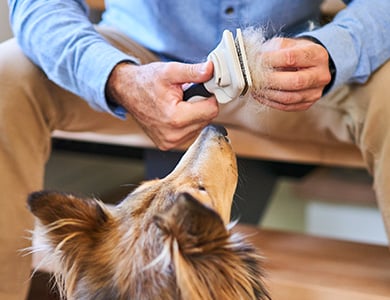
Shedding refers to the natural loss of dead hair to make room for new coat growth. For most dogs, this process is more noticeable in the spring and fall.
In the spring, dogs shed their winter coat to better tolerate warmer weather. In the fall, their coat becomes thicker to help protect them from the cold.
Dogs with an undercoat, such as Huskies, Shiba Inus, Newfoundlands or German Shepherds, tend to experience more noticeable shedding, as a large amount of hair is released in a short period of time. Dogs with short, coarse coats, like Pugs, French Bulldogs or Boston Terriers, shed as well, but their hair is shorter and finer, making it less noticeable. In all cases, shedding is a natural and normal process that affects all dogs.
The Dog Hair Growth Cycle
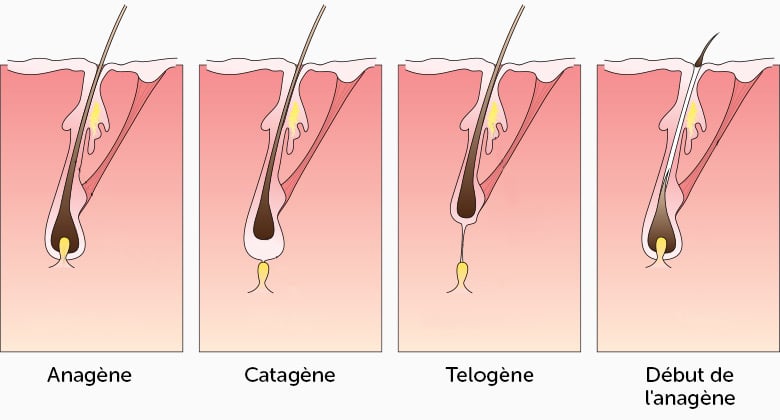
A dog’s hair follows a natural life cycle made up of three phases: the growth phase, the transition phase, and the resting phase followed by shedding.
In dogs with an undercoat, several types of hair grow from the same follicle: guard hairs, secondary hairs and the undercoat. This cycle lasts an average of 21 days, which explains why some dogs shed continuously.
What Can You Do When Your Dog Is Shedding a Lot?
Regular Brushing
Brushing is one of the most effective ways to control dog shedding. It helps remove dead hair before it ends up around the house and stimulates healthy skin. Ideally, brushing should be done several times a week during shedding season.
What Types of Brushes Should You Use During Shedding Season?
Choosing the right brush is essential to properly manage shedding and ensure your dog’s comfort. Using a tool adapted to your dog’s coat type helps remove dead hair more effectively and makes brushing more enjoyable.
- Soft‑bristle brush
Suitable for short‑haired dogs. It removes surface hair while gently stimulating the skin.
- Slicker brush
Recommended for medium‑ to long‑haired dogs. Often rectangular or square in shape, slicker brushes feature fine, slightly curved metal pins. They gently penetrate the coat to remove dead hair, loosen small tangles and aerate the coat, making them especially useful during shedding season.
- Undercoat rake or comb
Very effective for dogs with a dense undercoat. It reaches the lower layers of the coat to remove a large amount of dead hair.
- Metal comb
Ideal for finishing touches and checking for tangles, especially in long‑haired dogs.
Should You Bathe Your Dog During Shedding Season?
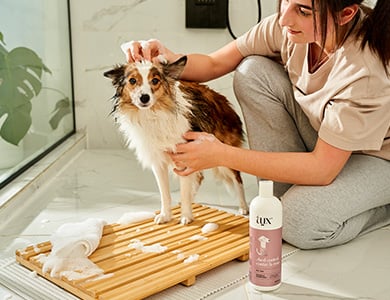
Yes, bathing your dog during shedding season can be beneficial, as long as it’s done properly. A bath helps loosen dead hair, moisturizes the skin and improves brushing efficiency.
It is important to use a shampoo that is suitable for shedding or sensitive skin, specifically designed for dogs. After bathing, proper drying helps remove even more loose hair and prevents hot spots, a skin infection generally caused by improper drying. However, frequent bathing should be avoided, as it can dry out the skin. In general, a bath every four to six weeks is sufficient, unless otherwise recommended.
Can Supplements Help Reduce Shedding in Dogs?
In some cases, yes. supplements can support skin and coat health, especially when shedding is more pronounced or when a dog has sensitive skin.
Supplements formulated for skin and coat health often contain key nutrients such as fatty acids, biotin and zinc. These nutrients help keep the skin well hydrated and strengthen the coat, making hair less dry and brittle.
Popular options include salmon oil or harp seal oil, known for their high content of essential fatty acids. These oils can help improve coat texture and support overall skin health.
Should You Shave a Dog That Sheds a Lot?
Shaving a dog with an undercoat is generally not recommended to control shedding. A dog’s coat acts as a natural temperature regulator, protecting them from both cold and heat.
Shaving can lead to excessive undercoat regrowth and disrupt the natural balance of the coat. It may also negatively affect a dog’s overall health, especially if they already have a medical condition or sensitive skin.
Before considering shaving, it’s important to talk to your veterinarian, who can assess your dog’s situation and recommend the safest and most appropriate approach.
When Should You Be Concerned About Your Dog’s Shedding?
It’s important to seek professional advice if shedding is accompanied by:
- Patchy or thinning coat, or areas with little to no hair
- Sores, redness or excessive itching
- Hair that suddenly becomes very dry, dull or brittle
These signs may indicate an underlying health issue.
The Importance of Seeking Professional Advice
Every dog is unique. Coat type, breed and lifestyle all play an important role in shedding. A knowledgeable advisor or professional groomer can recommend the best practices, brushes and products to help your dog get through shedding season more comfortably.
Shop for your pup: