If Your Cat Urinates Outside the Litter Box: What It Could Mean
If your cat suddenly starts urinating on the bed, the couch, or elsewhere in the house, it’s important to understand that this is not a sign of revenge. In most cases, it is a distress signal indicating an underlying health issue.
Urinary problems in cats can have several causes, including idiopathic cystitis, the presence of crystals or stones, a urinary tract infection, or, in more serious cases, a urinary blockage. Regardless of the suspected cause, prompt veterinary attention is essential to prevent complications.
Feline Idiopathic Cystitis: A Common Cause
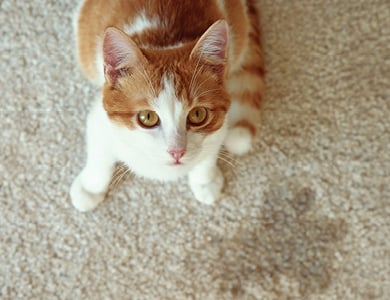
Idiopathic cystitis is the most common cause of urinary problems in young adult cats. It is characterized by inflammation of the bladder that is often related to stress, without a bacterial infection.
Contrary to popular belief, antibiotics are not routinely prescribed for this condition. They are used only when an infection is confirmed through urinalysis and urine culture. It is also important to note that true urinary tract infections are far more common in older cats than in young adults.
How to Recognize Urinary Problems in Cats
Signs of urinary problems may vary from one cat to another, but certain behaviors should raise concern. A cat may begin urinating outside the litter box, make frequent trips to the box without producing urine, strain, or pass only small drops. Blood in the urine, a strong or unusual odor, vocalizations associated with pain, or excessive licking of the urogenital area are also warning signs.
More general symptoms may include withdrawal, refusal to be handled, especially around the abdomen, reduced appetite, lethargy, or vomiting.
When vomiting or marked lethargy is present, the situation becomes a veterinary emergency. A urinary obstruction can lead to kidney failure and severe electrolyte imbalances, which can be fatal within 24 to 72 hours if left untreated.
Urinary Crystals and Stones: How Do They Form?
Crystals or stones may form when urine is too concentrated, contains excessive amounts of certain minerals (such as calcium, magnesium, or phosphate), or when its pH is imbalanced.
Identifying the type of crystal or stone is a critical step in determining the appropriate treatment. Some types, such as struvite stones, can be dissolved using specialized veterinary diets, while others require mechanical or surgical intervention. This is why an accurate diagnosis is essential before beginning treatment.
What Are the Risk Factors?
Several factors can increase a cat’s risk of developing urinary problems. Stress plays a major role, as do changes in routine, excess weight, lack of physical activity, and inadequate hydration. Diet also influences urine concentration and pH.
Male cats are at higher risk due to their longer and narrower urethra, which makes blockages more likely. Genetics can also be a contributing factor. Finally, a cat that has experienced urinary issues in the past remains at risk for life and may require long-term dietary management.
How Is the Diagnosis Made?
A urinalysis is always the first step in evaluating urinary problems. Depending on the findings and the cat’s condition, the veterinarian may recommend a urine culture to confirm or rule out infection, as well as imaging tests such as X-rays or ultrasound to detect crystals, stones, or blockages.
These diagnostic tools help differentiate between idiopathic cystitis, infection, stones, or obstruction and prevent unnecessary or inappropriate treatments.
Preventing Urinary Problems in Cats
Prevention is based on several key pillars. An appropriate diet, formulated by veterinary nutritionists, helps maintain proper urinary pH and reduces the risk of crystal formation. Hydration is equally important. Offering multiple water bowls, refreshing the water frequently, using fountains, and incorporating wet food into the daily diet can make a significant difference.
Maintaining a healthy body weight through proper portion control and regular activity also helps reduce risk. In addition, stress management plays a crucial role, particularly for sensitive cats. Providing sufficient resources (food, water, litter boxes, resting areas), enriching the environment, maintaining predictable routines, and reducing conflict in multi-cat households are all effective strategies. When necessary, veterinarian-recommended solutions such as pheromone diffusers may help reduce anxiety.
Litter box management is also essential. A clean litter box, scooped daily, that is large and open is recommended. A general rule of thumb is to provide one litter box per cat, plus one extra.
Key Takeaways
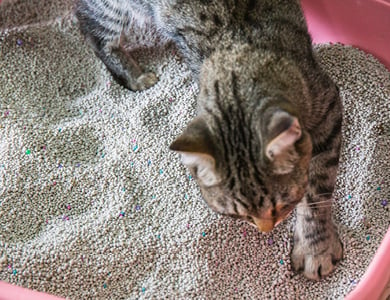
A cat that is straining to urinate or unable to do so successfully is in a dangerous situation. In certain cases, complications can progress rapidly and become fatal within 24 to 72 hours. An accurate diagnosis allows for appropriate treatment and helps prevent management errors.
The best protection lies in prevention, which includes proper hydration, an appropriate diet, stress reduction, and environmental enrichment. For healthy adult cats in need of a maintenance diet, urinary care formula from Vetdiet may be suitable options.