Let’s address the elephant in the room right away. Having a litter box at home naturally comes with odors. It is still a portable toilet, let’s be honest.
But once you understand that a good cleaning routine solves most odor and comfort issues for your kitty, it becomes much more motivating to get into the habit.
Let’s break down all the essentials for properly cleaning your cat’s litter box without overcomplicating things. And if you read until the end, you will also discover my best tips for keeping litter boxes cleaner and, at the same time, preventing your cat from turning their nose up at the litter box.
Ideal Cleaning Frequencies to Ensure Cleanliness
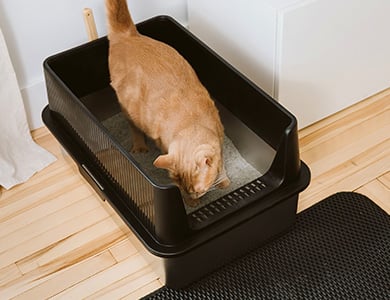
The frequency at which you clean your litter box, or boxes, literally changes everything. We are lucky to have clean animals that instinctively take care of their business, but it is up to us to create the hygienic environment they need to stay clean.
How Often Should You Scoop?
Ideally, you should remove waste from each litter box at least once a day. My little trick to avoid forgetting? Add litter scooping to one of your already established daily routines. This task, which may seem unpleasant, will eventually become automatic, without you even thinking about it.
How Often Should You Clean the Entire Box?
About once a month. Why is this just as important as daily scooping? Because it helps remove all the odors and particles that have built up on the sides of the box. This step is often neglected by cat parents, so let’s take a closer look at how to build a complete cleaning routine.
Products to Use and Ones to Avoid
To fully clean your litter box, you will need:
- Dishwashing gloves (and a mask, why not, if it helps you get through it)
- Garbage or compost bag, depending on the type of litter*
- The cleaning product of your choice (more on that below)
- A brush or sponge dedicated exclusively to litter box cleaning
- Access to a water source (garden hose, large sink, or bathtub)
- A drying area for the box or towels to dry it
- A new bag of litter
*Only certain types of litter can be composted, for example plant-based pellets like tofu, corn, or pea. This also depends on your municipality’s regulations, so it is very important to check beforehand.
The big question is which cleaning product should you use? And my first answer is this, there is no need for harsh products like bleach. Quite the opposite.
It would be counterproductive to eliminate the strong odor of waste only to replace it with a strong cleaning product smell. Your cat is just as sensitive to one as the other. The goal of a deep clean is to remove the particles and litter stuck to the sides of the box while eliminating as many odors as possible.
In Summary
Cleaning products to use:
- Dish soap, simple and effective
- Purodora Lab litter box odor neutralizer
- Purodora Lab urine odor neutralizer
Cleaning products to avoid:
- Bleach
- Homemade cleaners with essential oils, especially tea tree, citrus, lavender, mint, cinnamon, clove, and eucalyptus, due to their known toxicity to cats
- Any cleaning product with strong fragrances, even if it is marketed for cats, if the smell is too strong, it can still cause issues for your kitty
Steps for a Proper Deep Clean
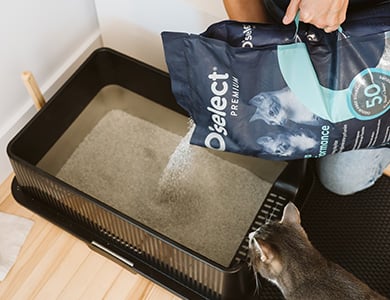
- Set yourself up near your chosen water source with all the necessary supplies within reach. Having everything accessible makes the task more efficient and therefore quicker.
- Empty the entire contents of the litter box into a garbage or compost bag, depending on the type of litter you use.
- Fill the box with warm water and a bit of your cleaning product, then let it soak for a few minutes to help loosen residue on the sides. The dirtier it is, the longer you should let it soak.
- Empty the water and remove the residue to avoid clogging your drain if you are using a sink or bathtub.
- Add the appropriate amount of your chosen cleaning product, according to the instructions on the bottle or the level of dirt, along with a bit of water, and start scrubbing thoroughly.
- After one full cleaning cycle and a good rinse, do not hesitate to repeat the process if there is still residue. Since you are already set up, you might as well make sure it is done properly.
- After the final rinse, make sure the box is completely dry, either air-dried or towel-dried, before adding fresh litter. You do not want the litter to stick to the sides and make the box dirty again right away.
It may seem obvious, but I can assure you this is the step most cat parents forget or only half-complete, and it has a much bigger impact on your cat’s comfort than you might think.
Quick Tips That Make All the Difference
Adjust Cleaning Frequency Based on Litter Type
Some types of litter are less clumping, which leads to a buildup of residue that is harder to remove during daily scooping.
The more clumping the litter is, for example clay, the cleaner it feels overall because you are able to remove most of your cat’s waste. With litter that breaks apart more easily, such as plant-based fibers, more frequent cleaning is necessary to ensure your cat’s comfort.
Keep the Litter Box Open
It might seem more hygienic to choose a covered litter box since fewer particles and odors escape into your home. But in reality, it often makes us less aware of how dirty it is getting, which delays cleaning. Even a short delay can quickly become uncomfortable for your cat.
So, even if it seems counterintuitive, an open litter box allows you to keep an eye on buildup and clean it more promptly, ensuring an adequate level of cleanliness.
Choose a Large Litter Box
The bigger the litter box, the more litter you can add, and the slower waste accumulates. Simple math. Your cat produces the same amount of waste, but in a larger space, which gives them a stronger sense of cleanliness.
One Litter Box per Cat, Plus One Extra
You have probably already heard this rule about how many litter boxes to have at home. Having more boxes than cats mainly helps because it gives them options, and that sense of control is very reassuring for a cat.
Having more litter boxes than cats also has one simple benefit. Waste builds up more slowly in each box, which means a cleaner experience for your cat.
Discover in this video how to choose a litter box that meets your cat’s needs.