Why is it important to clean your cat’s teeth?
Dental hygiene plays an essential role in your cat’s overall health. Without regular care, plaque and tartar build up quickly and can lead to gingivitis, painful mouth infections and eventually periodontal disease. These dental issues can also affect your cat’s appetite, weight, energy level and overall quality of life.
Brushing your cat’s teeth is one of the most effective ways to prevent oral diseases and ensure their long‑term well‑being. Here’s what you need to know to take care of your cat’s dental health at home and help improve their quality of life.
Essential tools for brushing your cat’s teeth

To brush your cat’s teeth, you will need a cat‑friendly toothbrush (or a finger brush) and a toothpaste formulated specifically for pets. These products are safe to swallow, gentle on your cat’s mouth and often available in appealing flavors that make the routine easier.
How to brush your cat’s teeth step by step
Brushing your cat’s teeth may feel intimidating at first, but with the right approach and a bit of patience, the routine becomes much easier and even pleasant for your companion. Here is a five‑step method to help you establish good habits at home.
Step 1: Choose the right moment, the right place and gather your supplies
Pick a calm moment in a quiet spot and keep the toothbrush and toothpaste within reach.
Step 2: Prepare your cat by touching their gums and lips
Before brushing, gently get your cat used to having the mouth area handled.
Step 3: Let your cat taste the toothpaste
Allow your cat to lick a small amount to become familiar with the texture and flavor.
Step 4: Brush gently to remove dental plaque
Use small circular movements, focusing on the back teeth where tartar tends to build up.
Step 5: Be reassuring, patient and finish with a reward
Praise your cat and offer a treat or affection to create a positive association.
Extra tips for brushing your cat’s teeth
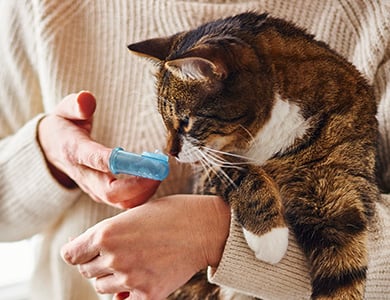
How often should you brush your cat’s teeth?
Ideally, you would brush your cat’s teeth every day since plaque can harden into tartar in as little as 24 to 48 hours. If that’s not realistic, brushing at least three times a week is enough to help prevent plaque buildup and support good dental health.
Never use human toothpaste
Choose a toothpaste designed specifically for cats, safe to swallow and formulated for their needs. Human toothpaste often contains fluoride, xylitol and foaming agents, which can be dangerous for cats if ingested.
How to train your cat to accept toothbrushing
It’s important to respect your cat’s pace and not get discouraged if they refuse at first. Learning takes time. With patience and consistency, the routine gradually becomes more natural.
How to open your cat’s mouth to brush their teeth
Place one hand under your cat’s chin and gently lift their head. Use a finger to slightly raise the lip so you can reach the teeth without forcing the mouth open. This gentle technique is recommended by veterinarians.
What to do if your cat does not like having their teeth brushed
There are helpful alternatives such as dental treats, dental wipes or certain dry foods formulated to help reduce plaque buildup. It’s important to remember that none of these options match the effectiveness of regular brushing, which remains the method most recommended by veterinarians.
Bite into life
Essentials for dental health
Shop
Trouvez tous vos produits pour la santé dentaire de votre chat chez Mondou :